Our Blog

When do my child's teeth erupt?

January 7th, 2021

Children begin the teething process after the age of six months.
While this is a very new experience, it could bring a whole new set of difficulties for the parents with an uncomfortable and hurting baby.
Educating yourself about how their teeth erupt and why they eventually lose them when they will start getting their adult teeth is the best way to navigate this period of their lives.
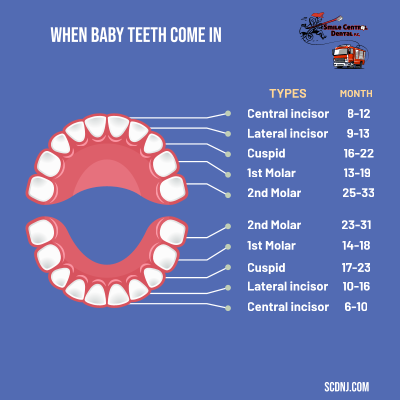
From 6 months to 3 years of age, kids get 20 primary or baby teeth. These teeth fall out (shed) at various times throughout childhood.

How Do My Children’s Teeth Erupt?
Typically, 6 months is when your child begins the teething process.
Before baby teeth start erupting, they form from the tooth buds in their jaw, and they start to move upward through the gums and into the mouth.
The first teeth that will start coming in are typically the incisors that are situated directly in the front of the mouth.

Baby teething

These teeth are often first noticed by nursing mothers as the baby begins testing them out while feeding. From this point until the age of 3 years,
there is a steady progression of teeth coming in until they’ve got their full complement of 20 baby teeth.

How Their Teeth Loosen And Fall Out
Ever wondered exactly what leads to the baby teeth loosening and falling out?
The tooth buds form a whole new set of teeth that start growing up under the primary teeth.
In the process, the old roots are resorbed, and the tooth moves up and out of the way, getting loose before they fall out. Children typically announcing that they have loose teeth is usually the first sign that it is happening.
It’s better to let a tooth go through the process on its own and fall out naturally.

Children's primary teeth ( baby teeth ) typically fall out around 6 years old.
The central incisors are usually the first to go. The first permanent molars are next. The last baby tooth usually is lost around 12 years of age.

Father and son enjoying healthy snack


How many teeth do people have?
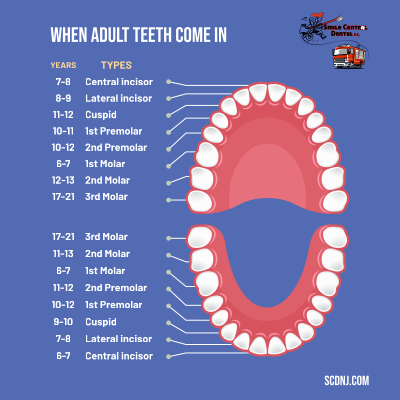
People have a total of 32 permanent teeth ( adult teeth ).
As said above, children will have 20 primary teeth by the age of 3 typically.

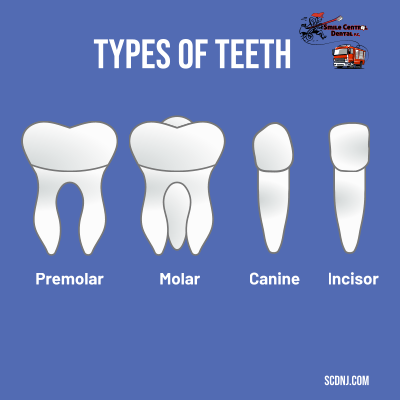
Below you can view teeth charts to get a good view of when certain teeth will erupt.

Baby Teeth erupt chart

Types of teeth

Adult teeth eruption chart


To schedule a first consultation or visit, please contact us at
one of our locations:

1. 140 Market St, Paterson, NJ 07505
Children's Dentistry - 3rd Floor
Orthodontics Center - 2nd Floor
Treatment Center - 4th Floor
(973) 742-4200

2. 625 Main Ave
Passaic, NJ 07055
Children's Dentistry - 3rd Floor
(973) 574-1000

3. 3196 John Fitzgerald Kennedy Blvd
3rd Floor
Union City, NJ 07087
(201) 325-8444

Is it Covid or is it a toothache ? Know the difference

December 22nd, 2020

Have a fever? Wondering if it's Covid-19 or Toothache?
Since Jan of 2020, Covid-19 has caused fear, anxiety, and uncertainty. Because you may already be aware of the symptoms of covid-19, and that's good, but it can make you panic.

Having a fever can make most people believe they or their children have covid
but having a fever can mean several other reasons such as a dental infection.
Let's read more to have a better understanding of the differences.

Kid with fever

=========================
First, here is a list to understand the symptoms of covid-19.
Knowing the common symptoms is very important.

Fever or chills
Cough
Shortness of breath or difficulty breathing
Fatigue
Muscle or body aches
Headache
New loss of taste or smell
Sore throat
Congestion or runny nose
Nausea or vomiting
Diarrhea

If you are experiencing these, stay as safe as possible, practice social distancing, and get tested. It is important to also limit your contact with the outside world to avoid being affected and spreading the virus respectively.


=========================
How do we determine if it is a toothache?
Here are the common symptoms of a toothache:

Pain in a tooth
Persistent throbbing or aching in a tooth
Sensitivity to hot or cold foods/drinks
Sensitivity to pressure when chewing
Swelling in the face or cheek
Tender/swollen lymph nodes under the jaw or in the neck

These symptoms create discomfort in the mouth. So self-monitoring for these signs can be very helpful in distinguishing a toothache from covid-19.

Teen with toothache


=========================
When to visit the dentist for emergencies

Dental Visit Dentist, NJ,New Jersey, passaic,Paterson, Garfield,Clifton, Wallington,Nutley, East Rutherford,Carlstadt, Lyndhurst,Totowa, Elmwood park,Haledon, Hawthorne,Lodi, Hackensack,Hasbrouck heights, Union city,West New york, Weehawken,Secaucus, North Bergen,Guttenberg, Fort Lee,Fairview, Edgewater,

If you feel your child has a toothache, please call the dentist right away.
Your child may have an infection. Infection can spread through the face and even the
body if left untreated.


1. 140 Market St, Paterson, NJ 07505
Children's Dentistry - 3rd Floor
Orthodontics Center - 2nd Floor
Treatment Center - 4th Floor
(973) 742-4200

2. 625 Main Ave
Passaic, NJ 07055
Children's Dentistry - 3rd Floor
(973) 574-1000

3. 3196 John Fitzgerald Kennedy Blvd
3rd Floor
Union City, NJ 07087
(201) 325-8444


Personal Dental Care: Brush Your Plaque Away

November 7th, 2020

Personal Dental Care: Brush Your Plaque Away

Personal Dental Care:
The primary aim of personal dental care is to prevent cavities from forming in the teeth.
In order for you to prevent cavities and maintain a healthy set of teeth, you need to remove plaque, a transparent layer of bacteria that stays on
the surface of your teeth.

Prevent Plaque: Some effective ways to prevent plaque from forming is to brush your teeth at least twice a day and floss at least once a day. Brushing your teeth will help stimulate your gums and in turn, keep them healthy and less susceptible to gum diseases.

Choose The Right Toothpaste: Toothpaste is typically made of detergents, abrasives, and foaming agents. The most common active ingredient in toothpaste is fluoride.
Fluoride is the component of the toothpaste that is responsible for preventing cavities from forming.

When choosing what toothpaste to buy, make sure that it has a great amount of fluoride to keep your mouth cavity-free. Studies say that 1 out of 10 people has a tendency to accumulate tartar rapidly. What is tartar? It is actually plaque that is difficult to remove and damaging because it is already in hardened form.

There are anti-tartar toothpaste and mouthwashes available in the market today which can help prevent tartar formation. Another great tip for preventing the formation of tartar is brushing the teeth located near the salivary glands.

For individuals that seem to have teeth that are sensitive to pressure, cold, and heat, there are toothpastes specially made for sensitive teeth.

However, a visit to the dentist may be most appropriate so that the dentist can assess whether the sensitivity of the teeth may lead to a serious problem such as nerve inflammation or a severe cavity.

Learn How To Floss Although brushing is considered to be the most important part of the personal dental care routine, it doesn’t actually have the ability to remove the plaque and food particles between the teeth, under the gum line, or within braces.

Dental floss is the weapon of choice to get rid of the abovementioned teeth and mouth “pests”. Flossing can be done at least once a day.

There are actually different kinds of flosses and these depend on the space that a person has in between his or her teeth. Most dentists would usually suggest unwaxed floss because it is easier to glide through narrow spaces.

However, recent studies have discovered that there is actually no significant difference in the effectiveness of the different kinds of dental flosses. When flossing your teeth, you should be very careful so that you can avoid injuring your gums.

Remember, gums are very sensitive and they can bleed easily. Never force the floss under the gums; just curve the floss around the edge of your tooth and form
a letter “c” then glide the floss up and down the side of each tooth. Do not forget to floss the backsides of your teeth as well.

All in all, maintaining your very own personal dental care routine can be easy, as long as you have enough willingness and determination to achieve a great set
of pearly whites.


Braces vs Invisalign

October 22nd, 2020

Have you been considering treatment for straightening your child's teeth?
Perhaps you are looking to make a decision towards a more confident, beautiful smile that your child deserves.


We currently have two treatments for straightening your child's teeth over time. Both will improve your smile and overall dental health. However, you may have questions about the differences between the two.

So what is the Difference between Traditional Braces and Invisalign?

TRADITIONAL BRACES:
Device:
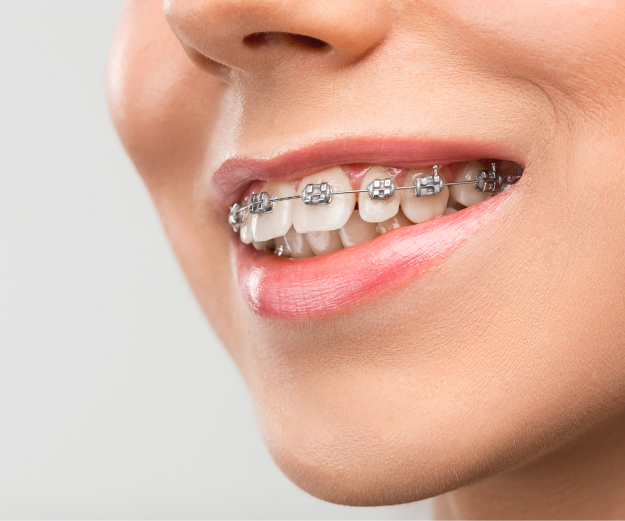
Traditional braces refer to metal brackets, wire, and rubber bands used to straighten your child's teeth. Metal braces include a wire called an archwire.
Your orthodontist will attach brackets to each tooth with bonding material.
These are gradually adjusted over time by tightening the wire which is held in place with rubber bands. This will place the teeth properly. People may shy away from braces and go with Invisalign due to the maintenance that metal braces include.

Time Involved:
- Braces don't come off until its time Braces 2 yrs treatment.
But patients often see results early. This helps to boost self-confidence and may encourage you to keep it up.
Completion expectancy of treatment can vary from patient to patient depending on what is being corrected therefore time frames are estimated whether the patient is advised metal braces or Invisalign treatment.
- Brackets can be tricky.
- Visits: About every 4-6 weeks. Fortunately, these visits are short ( about 30 min to 1hr)
- Slight soreness may occur with adjustments but should be temporary.


Convenience:
Traditional braces may provide better results depending on the challenging orthodontic needs a patient may have.

example: Teeth that may sit in different positions that are noticeable.
You may, however, want to consider this:
They may be a bit more involved to navigate around while flossing but it's not impossible and can be learned and there are accessories available that make cleaning easier. Visits for broken wires may occur.

Food Restrictions:
Unfortunately, there are some foods to avoid while wearing braces.
These may include:
- Popcorn, gum, apples, and other chewy stuff.

Cost:
Traditional braces tend to be more affordable than
Clear aligners. Both treatment options have accompanying payment options.
Most insurances are accepted as well as payment plans

Brushing vs Soaking:

Traditional braces are more likely to trap food and tend to be difficult to clean because they are fixed in the mouth.


INVISALIGN:
Device:
Invisalign is a popular treatment option due to being removable and virtually invisible.

Invisalign straightens your teeth without wires and rubber bands.
It uses a series of clear, customized, removable devices called aligners.
Braces have been around longer than Invisalign but this doesn't take away from
Invisalign at all. Both are very effective. Invisalign aligners are a bit more smooth.

Proven results: SmartTrack® material and SmartForce® features are clinically proven to improve control of tooth movement with Invisalign clear aligners
Your treatment might include as little as 12 trays or as many as 48

Time Involved:
How long does Invisalign treatment take?
you could see your new smile in as little as 6 months, however, completion expectancy of treatment can vary from patient to patient depending on what is being corrected therefore time frames are estimated whether the patient is advised metal braces or Invisalign treatment.

- Invisalign - Less time than traditional braces.
- 22-24 hrs wear Invisalign a day
- Braces 18 months to 3 years


Convenience:
Invisalign treatment is ideal for your busy schedule since you only need to visit our office every six weeks. Invisalign Clear aligners can treat a wide range of teeth-straightening conditions, including crossbites, crowding, open bites, gapped teeth, overbites, and underbites. Virtually invisible. Most people will not even notice that they are being worn. They are often referred to as more comfortable than metal braces due to the SmartTrack material. Straightens teeth more predictably and comfortably covered by many orthodontic insurance plans paying with pre-tax dollars from your HSA arranging a monthly payment plan


Food Restrictions:
Time for a snack? No problem. Take out your aligners to eat or drink whenever you want.


Cost:
Invisalign can typically cost more than their metal counterparts but there are available payment options. Most insurances are accepted as well as payment plans


Brushing vs Soaking:

It is as easy as taking your aligners off to brush and floss your teeth and then putting them right back in. Your aligners will stay cleaner if they are placed on clean teeth.

Must be considered:
Invisalign trays must also be cleaned.
Because bacteria can build up on the trays while you sleep during the night.
It's best practice to establish a routine to clean them in the morning and at night,
for the best oral health.

Soaking and Rinsing them is also a great practice.
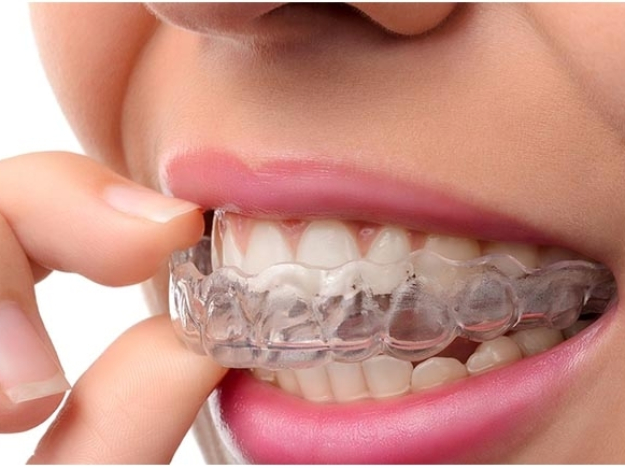
 

Invisalign Clear Aligner


Frequently asked questions:

Why Invisalign Treatment?

The Invisalign Treatment Process

Your First Consultation

Your Custom Treatment Plan

Here are some frequently asked questions about Invisalign

What are the primary benefits of Invisalign treatment?


Treatment

FEATURE INVISALIGN OTHER CLEAR ALIGNERS TRADITIONAL BRACES
Made from SmartTrack Material Yes
In-person consultations with real doctors Yes Yes
Easily removable for eating, drinking & flossing Yes Yes
No emergency visits for broken wires Yes Yes
Virtually invisible Yes Yes
Made from traditional brackets and wires Yes
Each aligner is trimmed to your gum line
for optimal comfort and appearance
Yes
Blue compliance indicator dots
to help you stay on track
Yes
Covered by many orthodontic insurance plans Yes Yes Yes


Treatment:
There’s never been a better time to straighten your teeth with the most advanced clear aligner in the world. Our office is proud to be a certified provider of Invisalign clear aligners, which give you a clear, convenient, and comfortable option to achieve the smile you’ve always wanted. This does not indicate that metal braces are not a great choice.


Conclusion:
Regardless of which orthodontic treatment you choose, the professional staff at
Smile Central Dental is skilled at providing you quality treatment giving you a winning smile with the best options for you.

Braces are the popular choice for most of our patients which is perfectly fine.
It all boils down to the patient's preference.

Consults are free for metal braces treatment and, or Invisalign treatment.
Most insurances are accepted as well as payment plans.
Convenient office hours and open on Saturdays.

To schedule a first consultation or visit, please contact us at
one of our locations:

1. 140 Market St, Paterson, NJ 07505
Children's Dentistry - 3rd Floor
Orthodontics Center - 2nd Floor
Treatment Center - 4th Floor
(973) 742-4200


2. 625 Main Ave
Passaic, NJ 07055
Children's Dentistry - 3rd Floor
(973) 574-1000


3. 3196 John Fitzgerald Kennedy Blvd
3rd Floor
Union City, NJ 07087
(201) 325-8444


invisalign the clear alternative to braces care credit making care possible today

Hours of operation vary by location. Please click on your desired office location for specific details: